Tree work we handle
- Pruning limbs back from roofs, gutters, driveways and fences
- Removing dead, broken and storm-damaged branches
- Raising low canopies so you can mow and walk underneath
- Shaping ornamental trees and crape myrtles
- Cutting back overgrown hedges and large shrubs
- Tree cutting, with the wood and brush cleaned up
Every tree job starts with a look at the tree, the access and what sits underneath it. Texting a few photos is the fastest way to get the conversation started.
When to trim trees in north Georgia
Late winter, while trees are dormant, is the best time for most pruning: the branch structure is easy to see and the tree puts its spring energy into healing the cuts. Crape myrtles are pruned in late winter too, lightly, without the hard topping that leaves knobby stumps.
Spring bloomers such as dogwoods and azaleas are the exception. Prune those just after they flower, or you will cut off next year's buds. Dead or hazardous limbs can come down at any time of year.
Signs a tree needs attention
- Dead branches or limbs with no leaves in summer
- Limbs hanging over the roof or resting on the gutters
- Branches that cross and rub against each other
- Cracks where a large limb joins the trunk
- A canopy so dense that grass will not grow underneath
Marietta's summer thunderstorms are hard on overextended limbs. Dealing with them before storm season is far cheaper than dealing with what they land on.
More light for the lawn
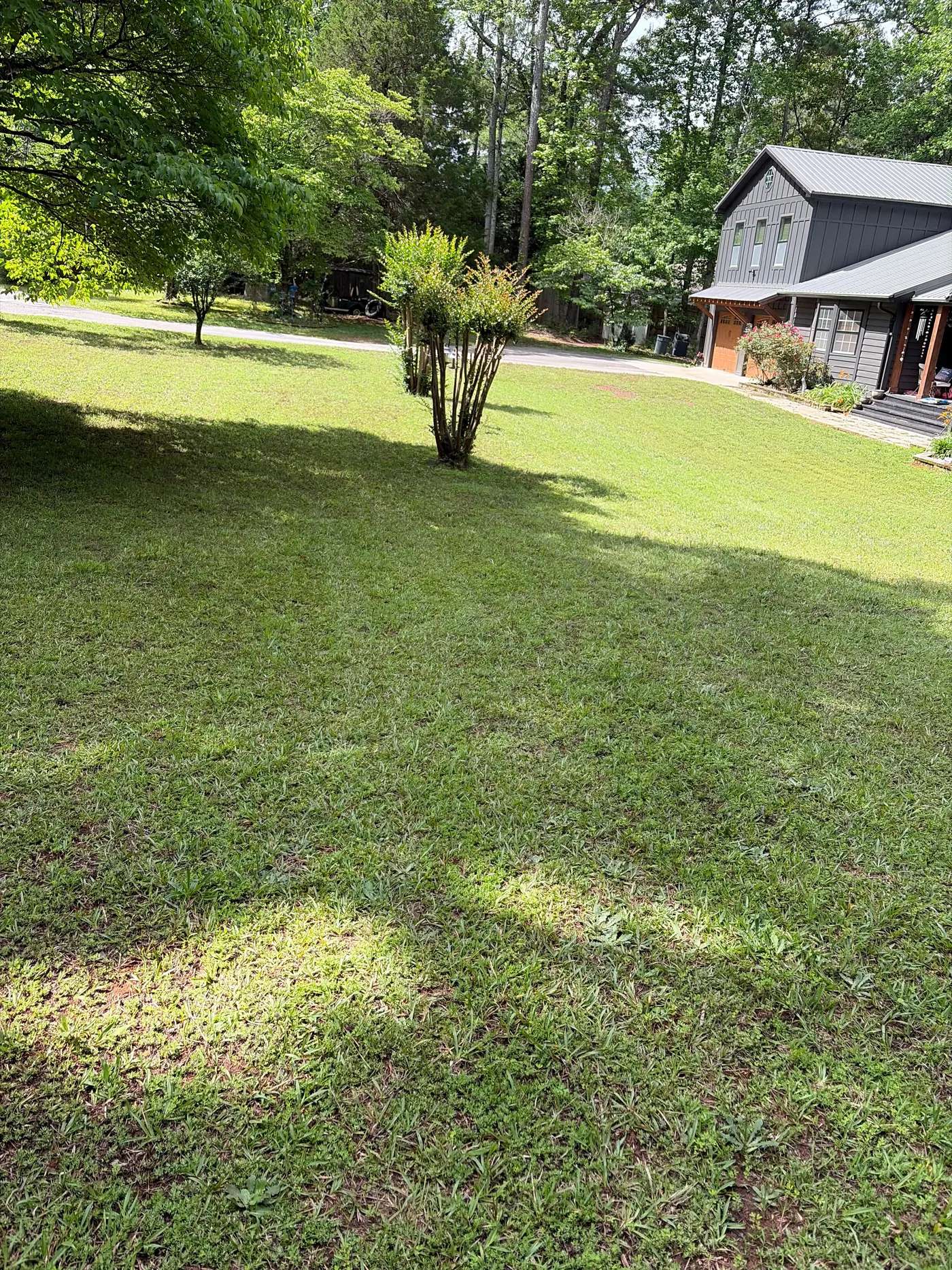
Thin, patchy grass under trees is usually a light problem. Raising and thinning the canopy lets more sun reach the ground, and it is often the step that makes new sod or a shade-tolerant fescue lawn work.
Part of looking after the whole yard
Tree work rarely happens on its own. Myrth G. had us prune her trees, install French drains and lay pine straw, and we now handle her weekly yard maintenance. One crew for all of it means the cleanup is done once and done properly.