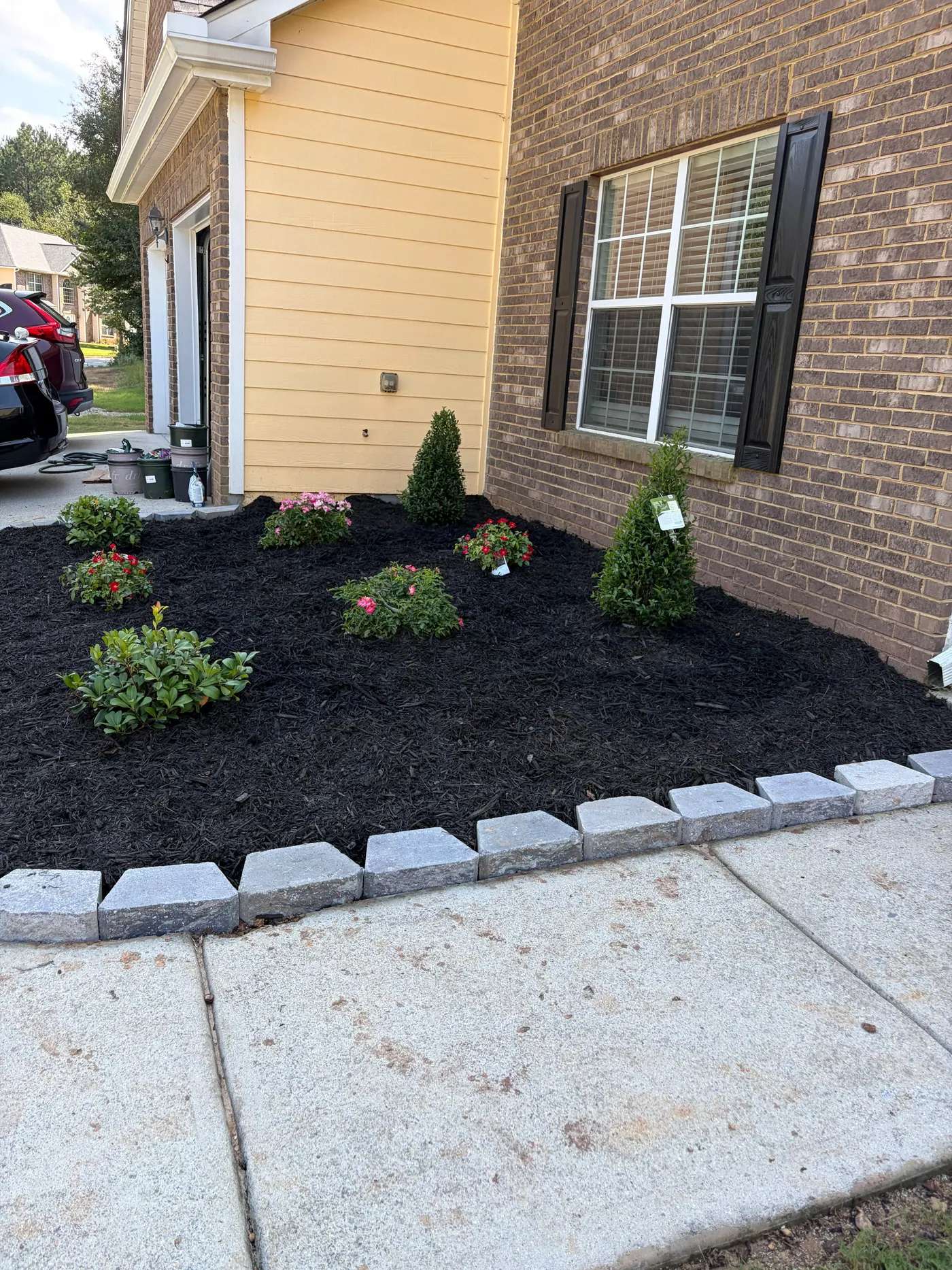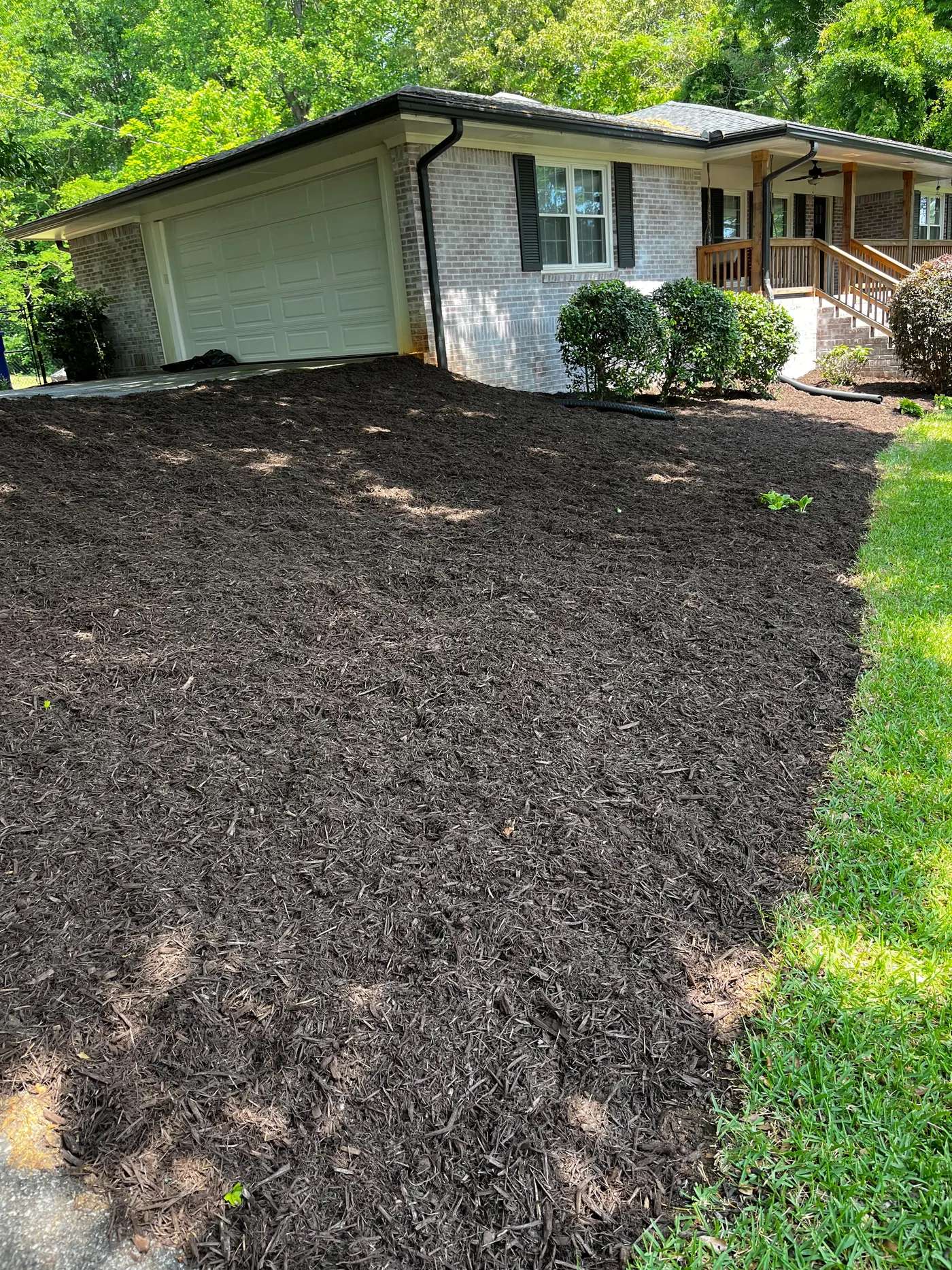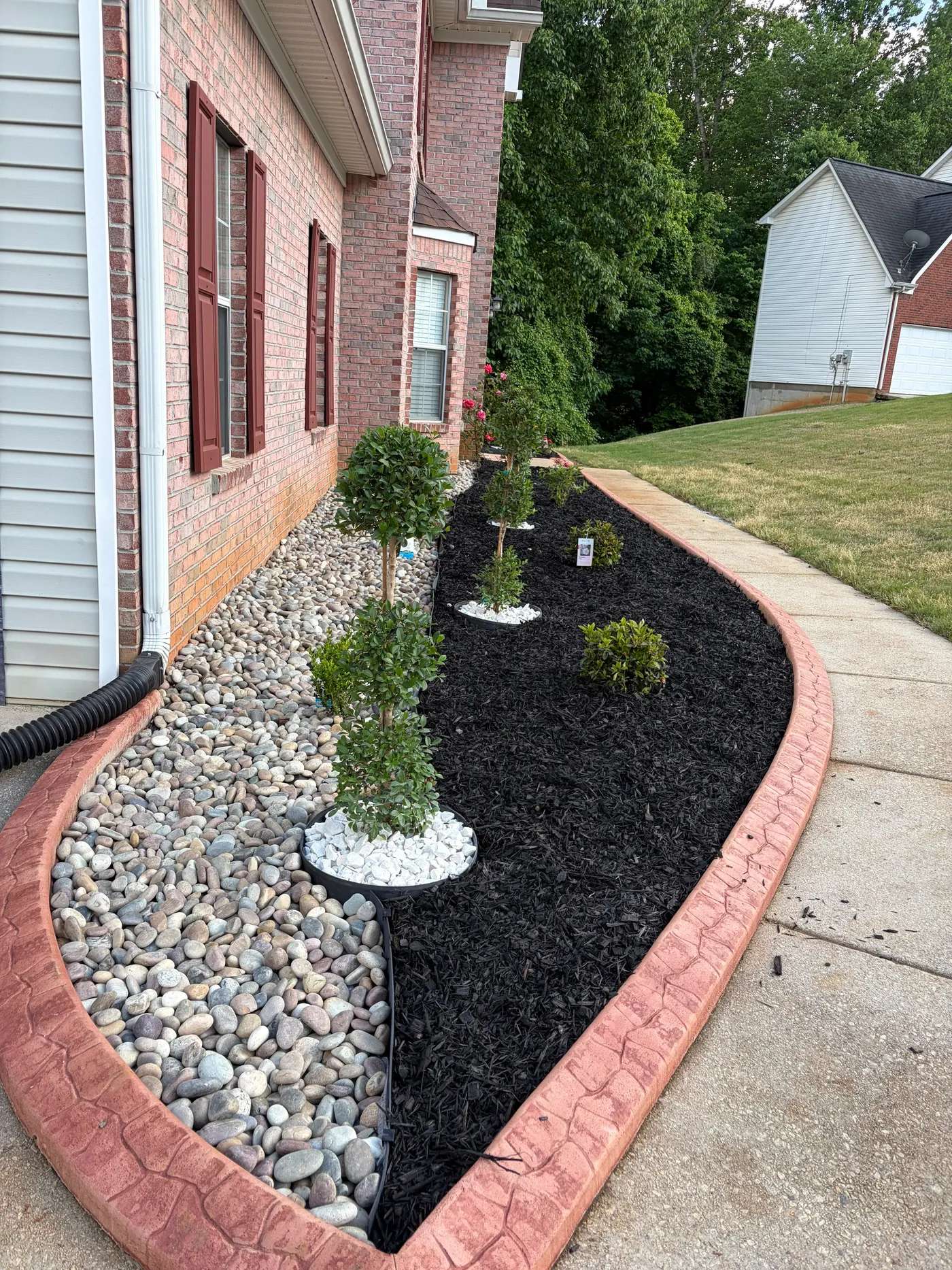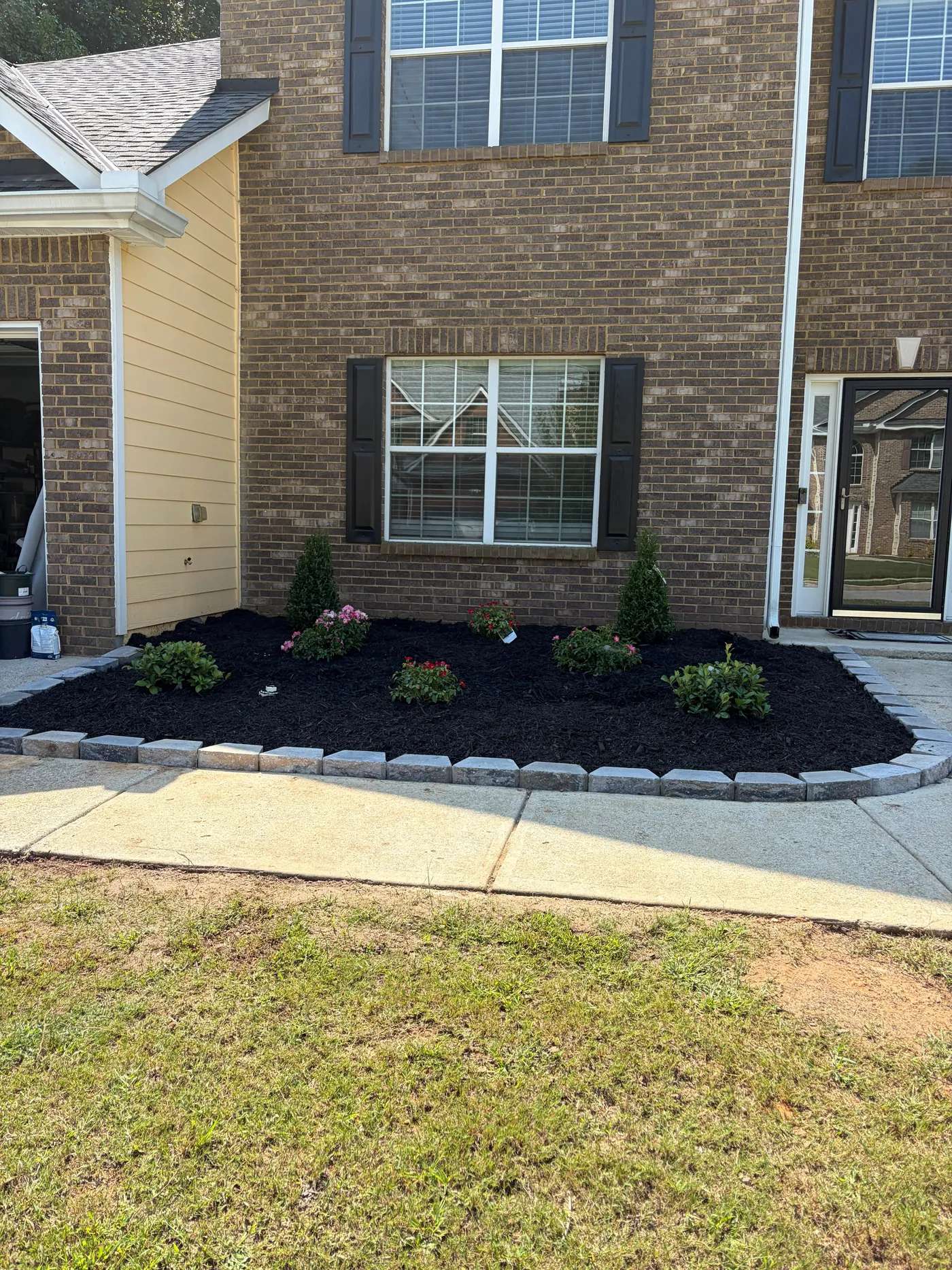
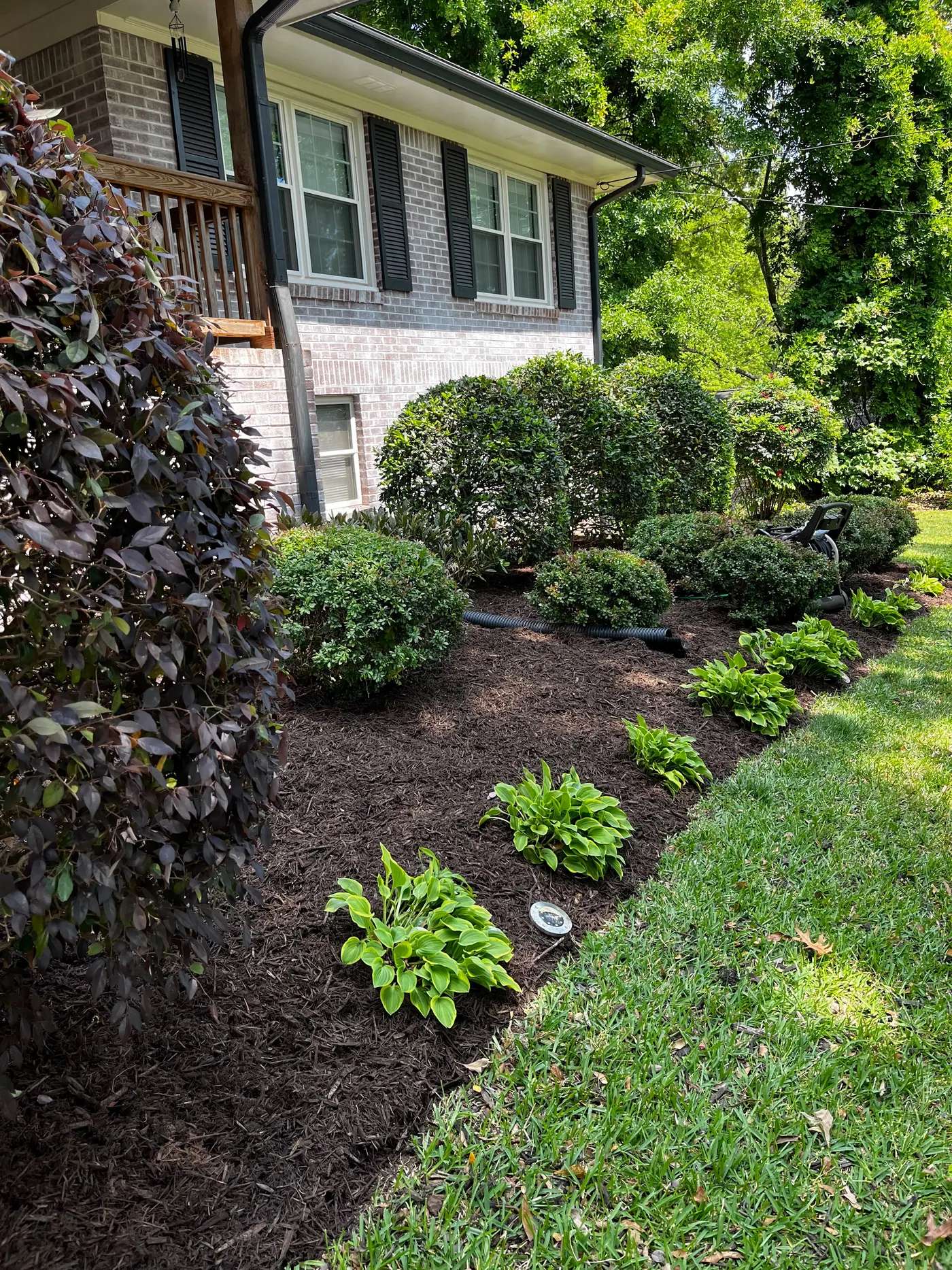
What a mulch job includes
- Clearing weeds, leaves and debris out of the beds first
- Cutting a clean edge between bed and lawn
- Spreading mulch or pine straw to an even depth across the whole bed
- Keeping mulch pulled back from tree trunks and the base of shrubs
- Sweeping walks and driveways before we leave
Mulch or pine straw?
Both hold moisture, cool the soil and keep weeds down. The choice comes down to the look you want and the ground you are covering.
Shredded mulch gives a bold, uniform color and suits flat beds near the house. Pine straw is lighter, knits together so it stays put on slopes, and is the traditional finish under pines and azaleas across Cobb County. It breaks down faster, so most beds get topped up once or twice a year.
Choosing a color for your home
Our photos show all three mulch colors on real jobs. Black mulch makes green foliage and white stone stand out and looks sharp against stone and grey siding. Brown is the most natural and forgiving choice. Red mulch picks up the tone of Georgia brick and matches the red curbing many neighborhoods here use.
How deep, and how often
Two to three inches is the right depth for mulch. Thinner than that and weeds push through; much thicker and water struggles to reach the roots. Piling mulch against a trunk, the so-called mulch volcano, holds moisture against the bark and invites rot, which is why we keep it pulled back.
Dyed mulch keeps its color for about a year in the Georgia sun. Spring is the most popular time to refresh it, before summer heat arrives, with fall a close second.
Pairs well with pressure washing
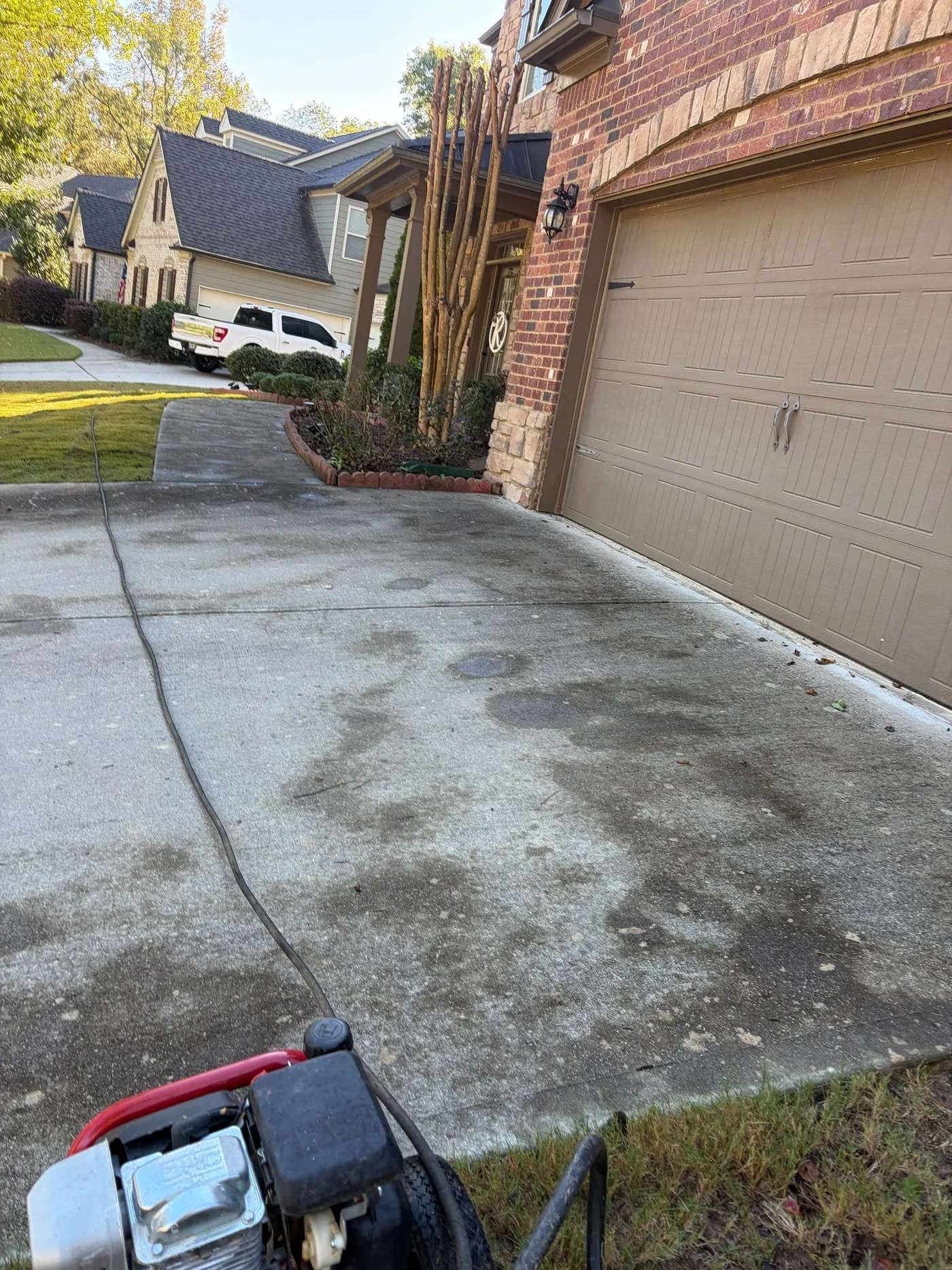
Fresh mulch next to a dark, stained driveway only does half the job. Sriura S. had us do both and described the result on Google as beautifully done. Booking them together is the quickest way to lift how a house looks from the street.