What we design and build
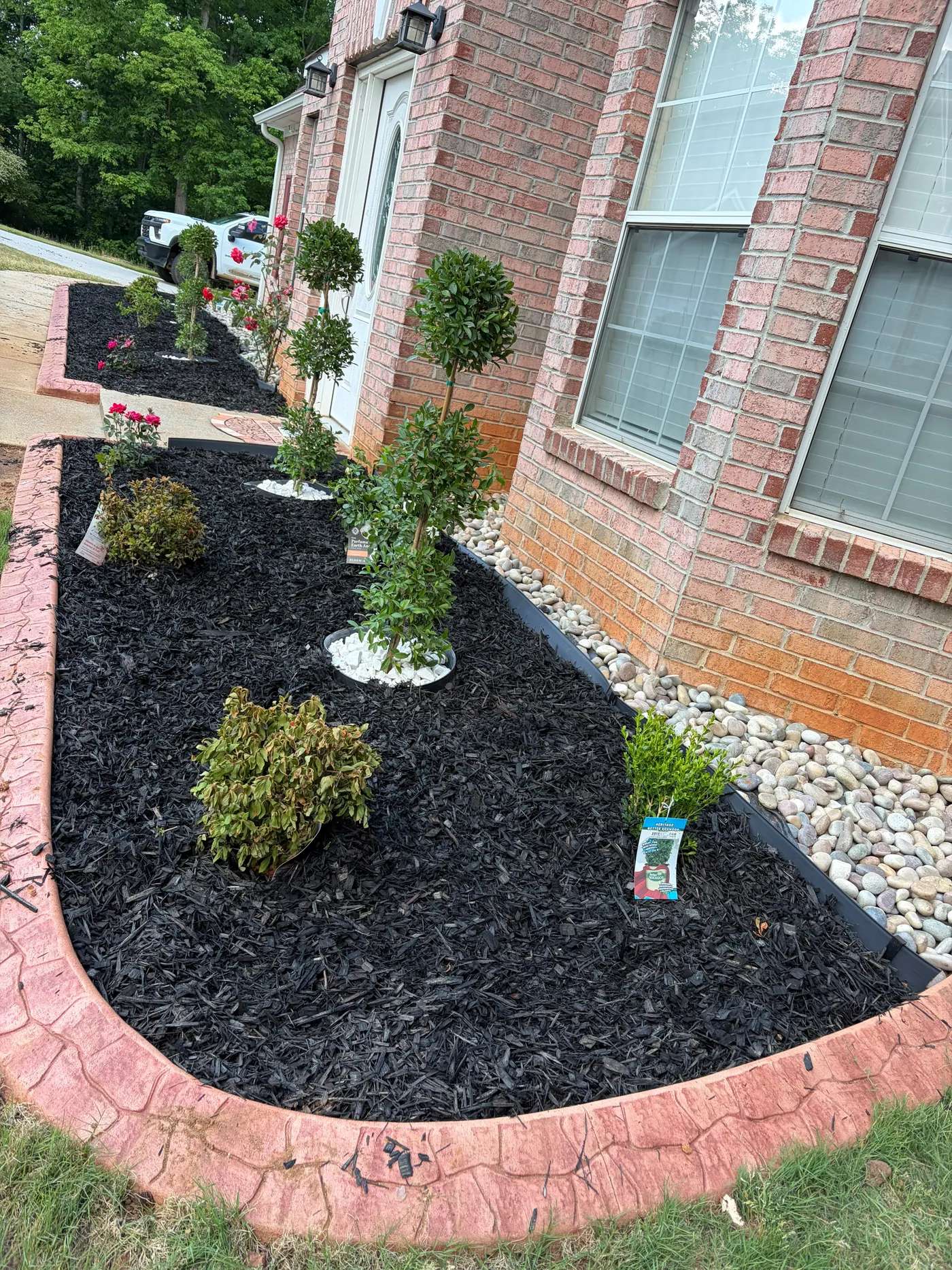
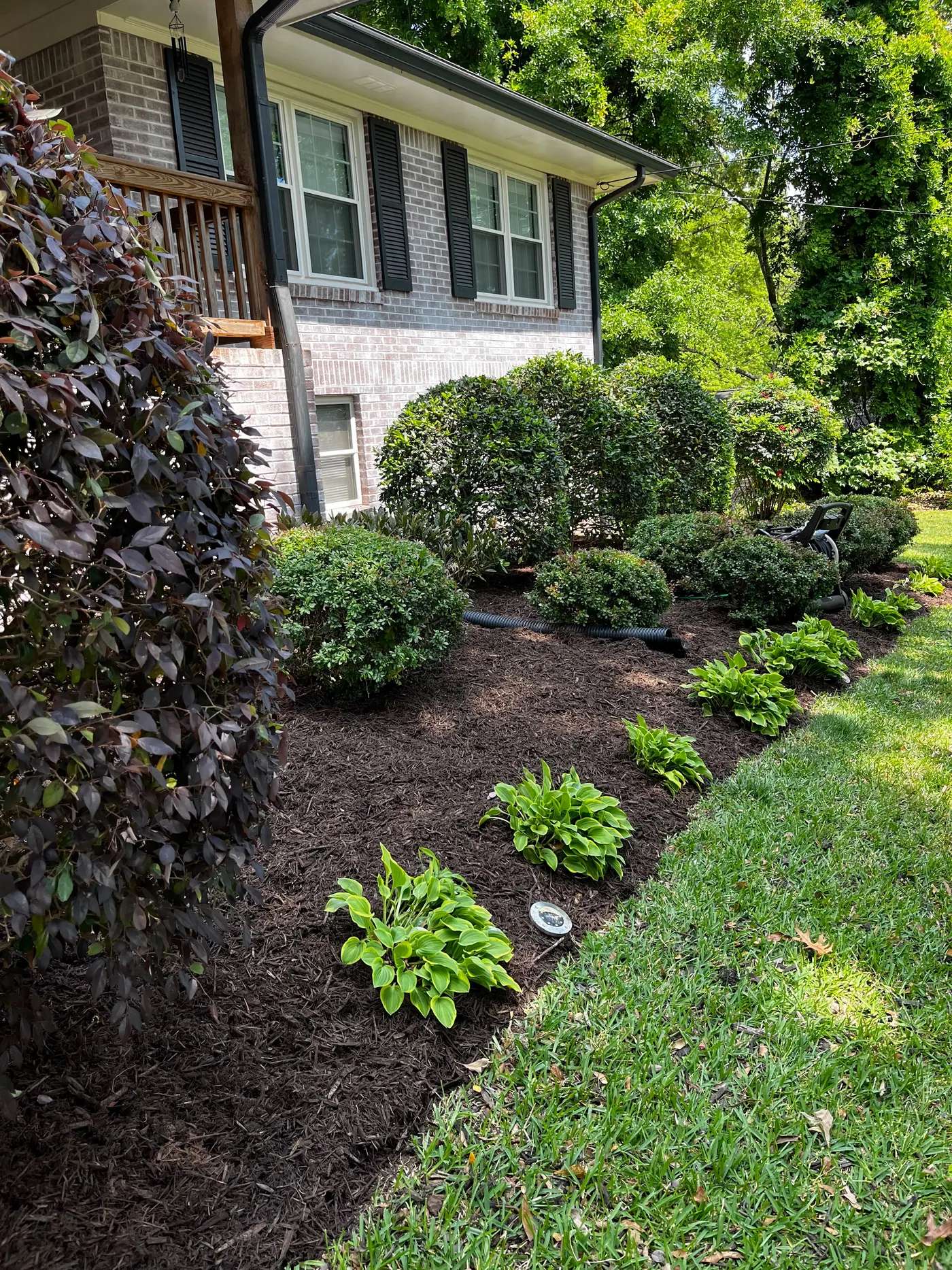
- New planting beds with shrubs, roses, perennials and seasonal color
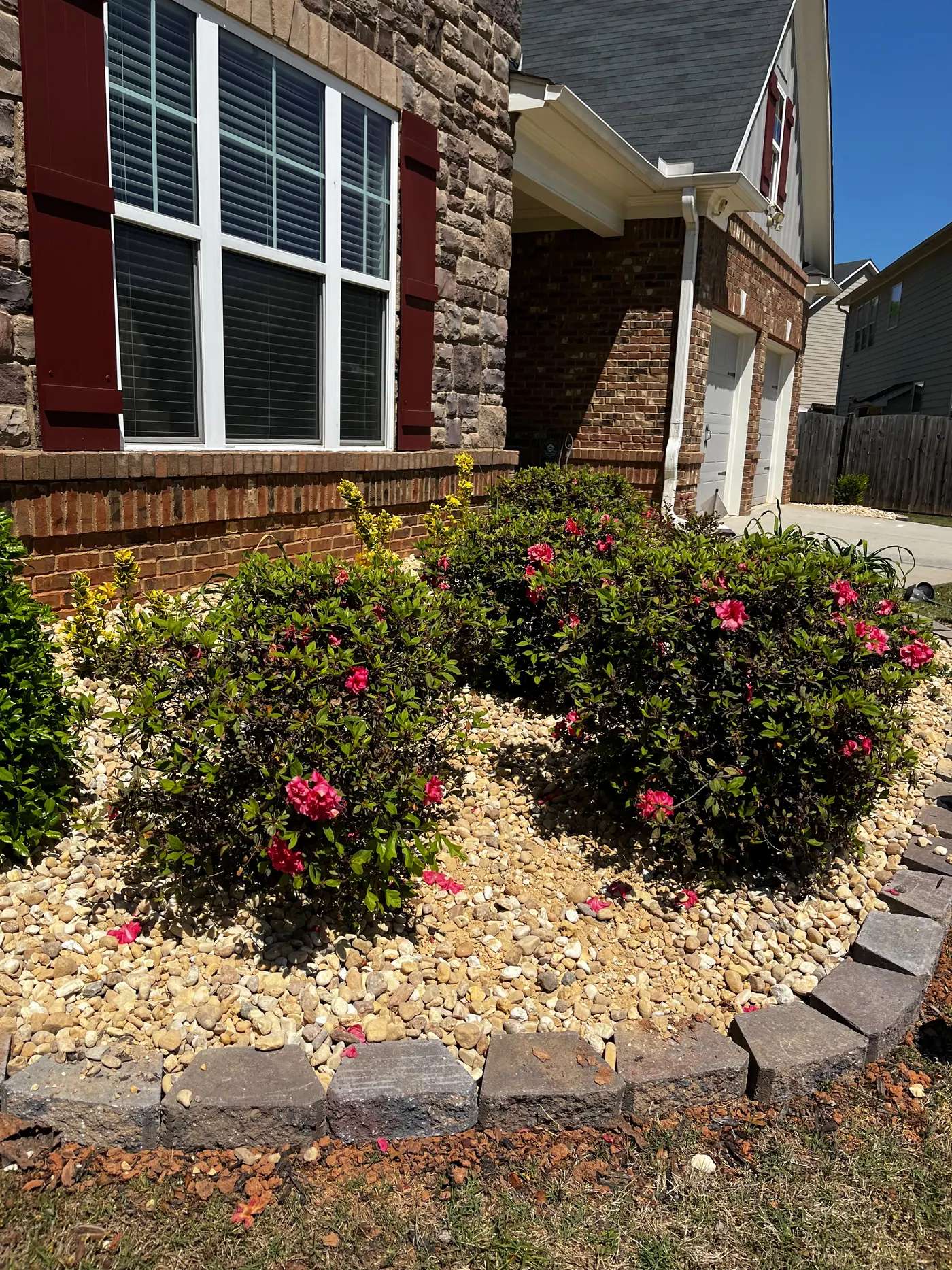
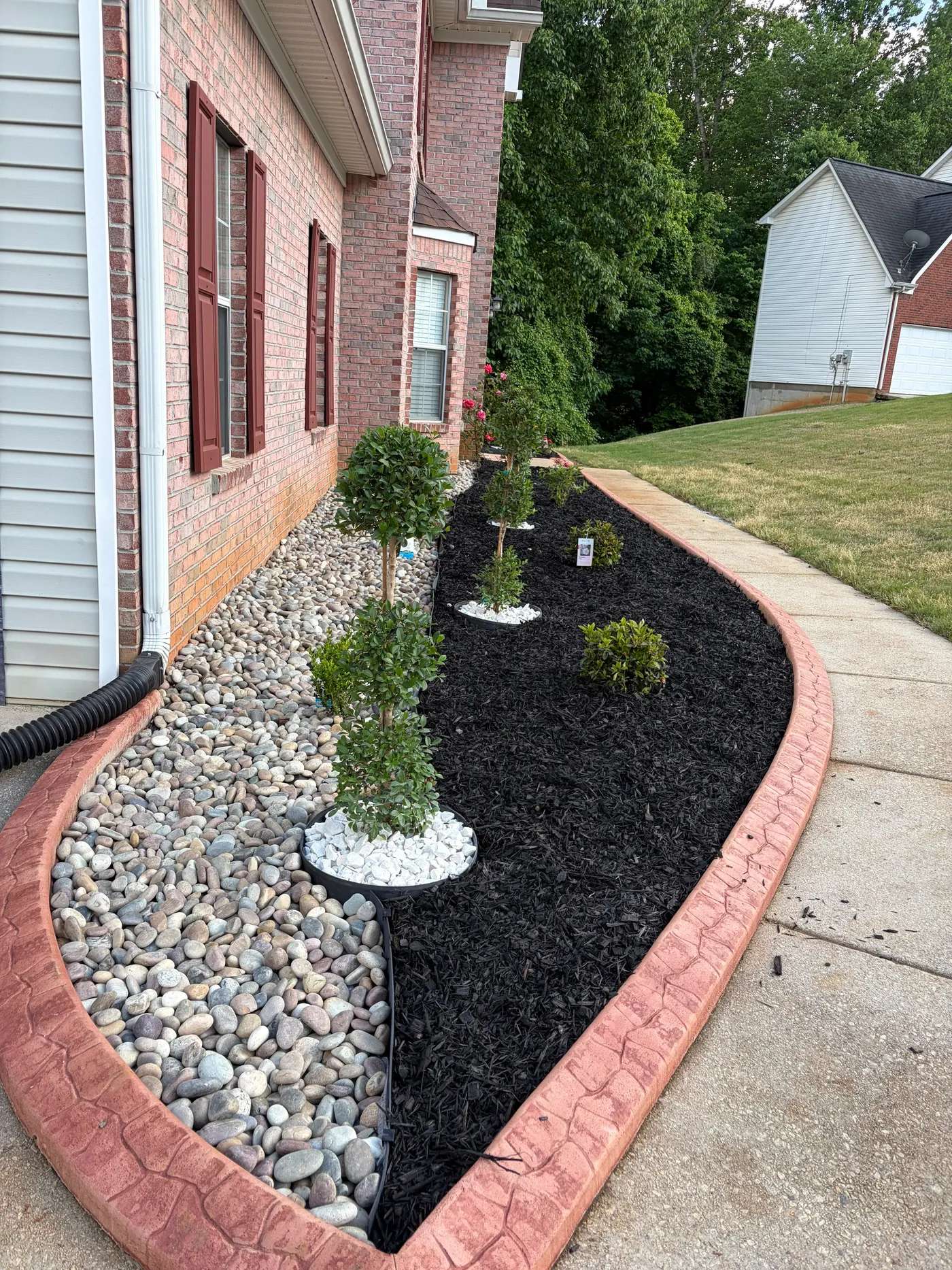
- Stone block borders and clean bed edging
- Decorative rock: white marble chips, river rock and gravel
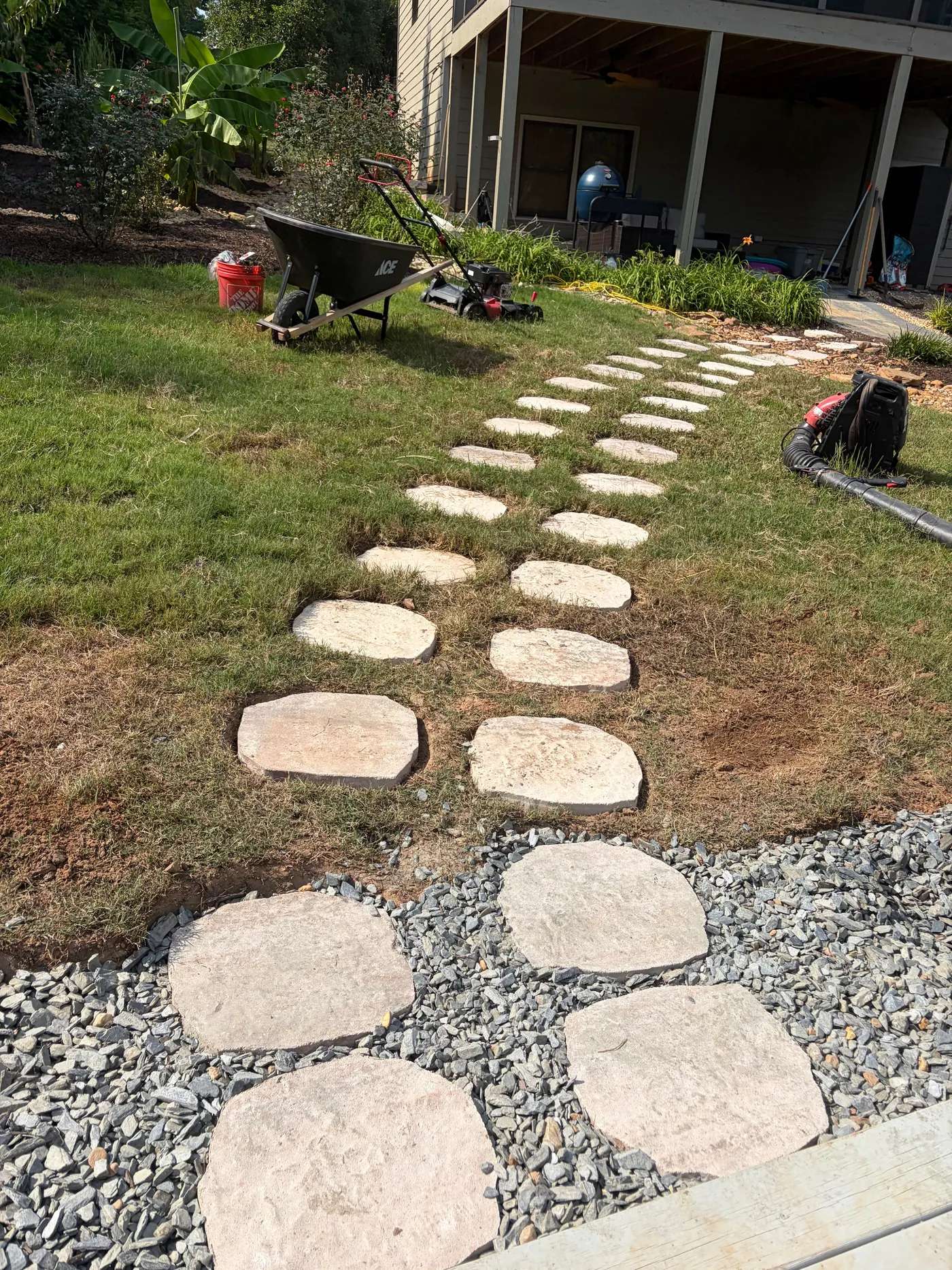
- Gravel garden paths and stepping-stone walks
- Tree rings and island beds
- French drains for yards that hold water
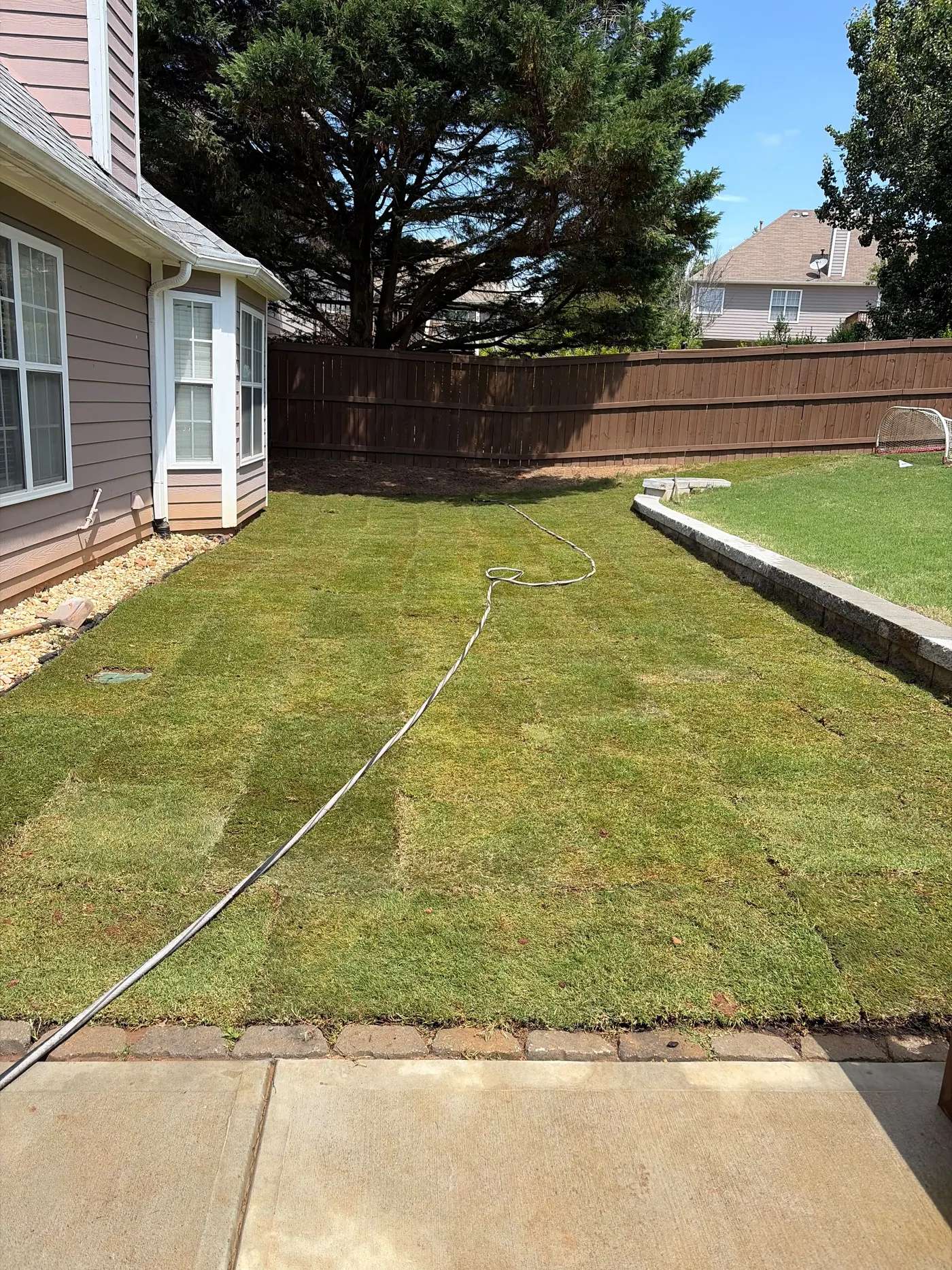
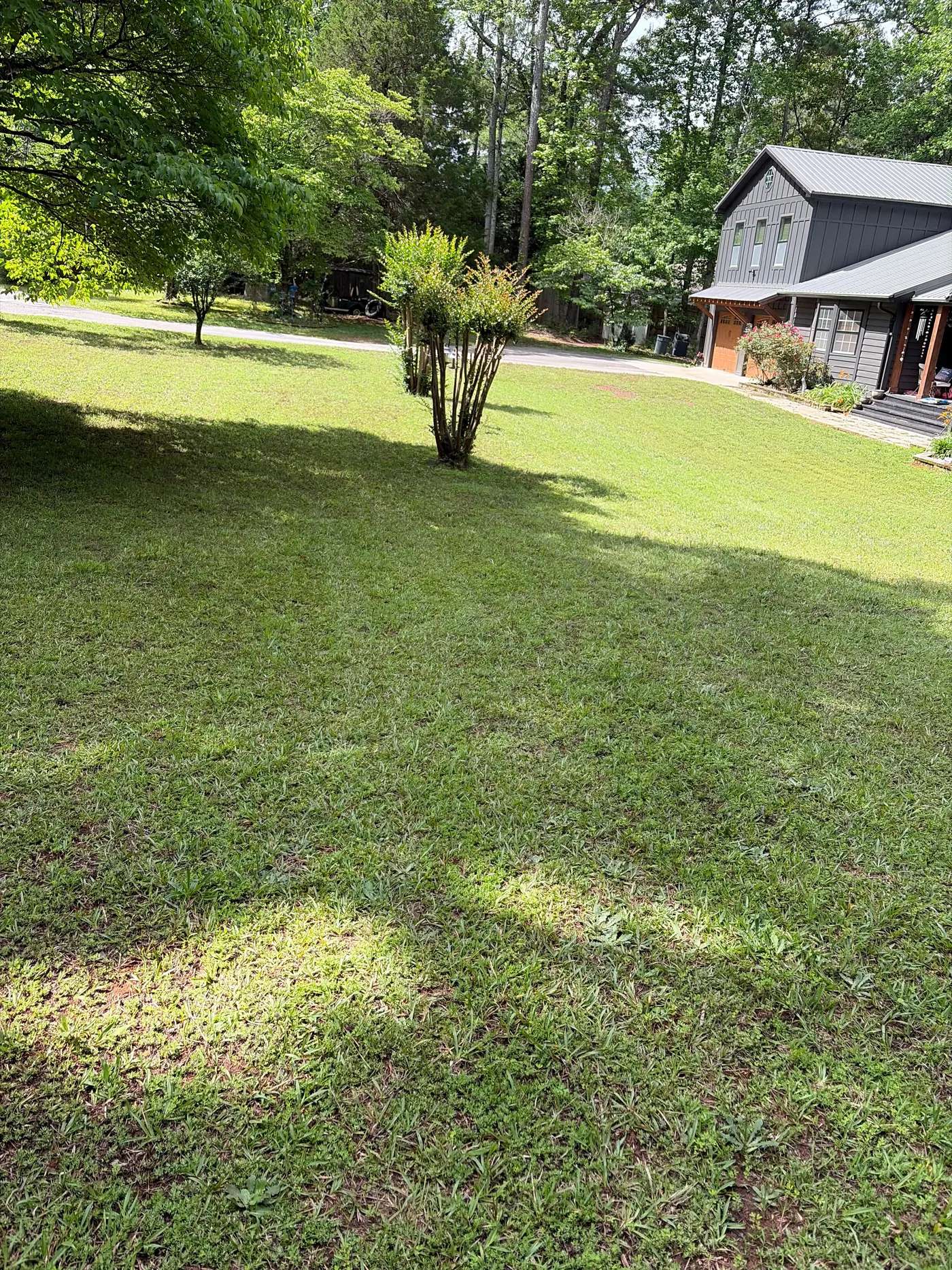
- Full front or backyard makeovers that combine beds, rock and new sod
How a project runs
- 1
Walk the yard. We look at sun, slope and drainage with you and talk through what you want the space to do.
- 2
Mark it out. Bed lines are painted on the ground and the plants are set out in their pots, so you can adjust the layout before any digging starts.
- 3
Build. Edging goes in, plants go in the ground, and the bed is finished with mulch or stone.
- 4
Clean up and walk through. We clear the site and go over the finished work with you.
Plans change once you see them full size, and that is fine. Marvin N. wrote on Google that we were very flexible with the adjustments he made as his project evolved, and still finished ahead of schedule.
Plants that cope with Georgia summers
Marietta has hot, humid summers, mild winters and heavy clay soil, so plant choice matters more than almost anything else. We match each plant to the sun it will actually get: sun-lovers like roses and crape myrtles out in the open, hostas and other shade plants under the trees, and tough evergreen shrubs for year-round structure along the foundation.
Fall is the best planting season here because roots keep growing through the mild winter. Spring works well too. Summer planting is possible but needs much more watering.
Rock, borders and paths
Stone does not fade or wash away, which makes it a good fit for narrow side yards, downspout areas and anywhere mulch keeps floating off. White marble chips brighten shaded entries, river rock suits beds next to brick, and a gravel path turns a worn track across the lawn into a feature.
Drainage and French drains
Clay soil drains slowly, so low spots stay soggy and water collects against foundations. A French drain, a gravel-filled trench with a perforated pipe, collects that water and carries it somewhere it can soak away. Myrth G. mentions in her Google review that we put in French drains at her home along with tree pruning and pine straw.